Showing posts with label Commentary. Show all posts

Monday, 28 August 2017

Fieldwork 2017 – that’s all folks!

Commentary by Sara Tavares


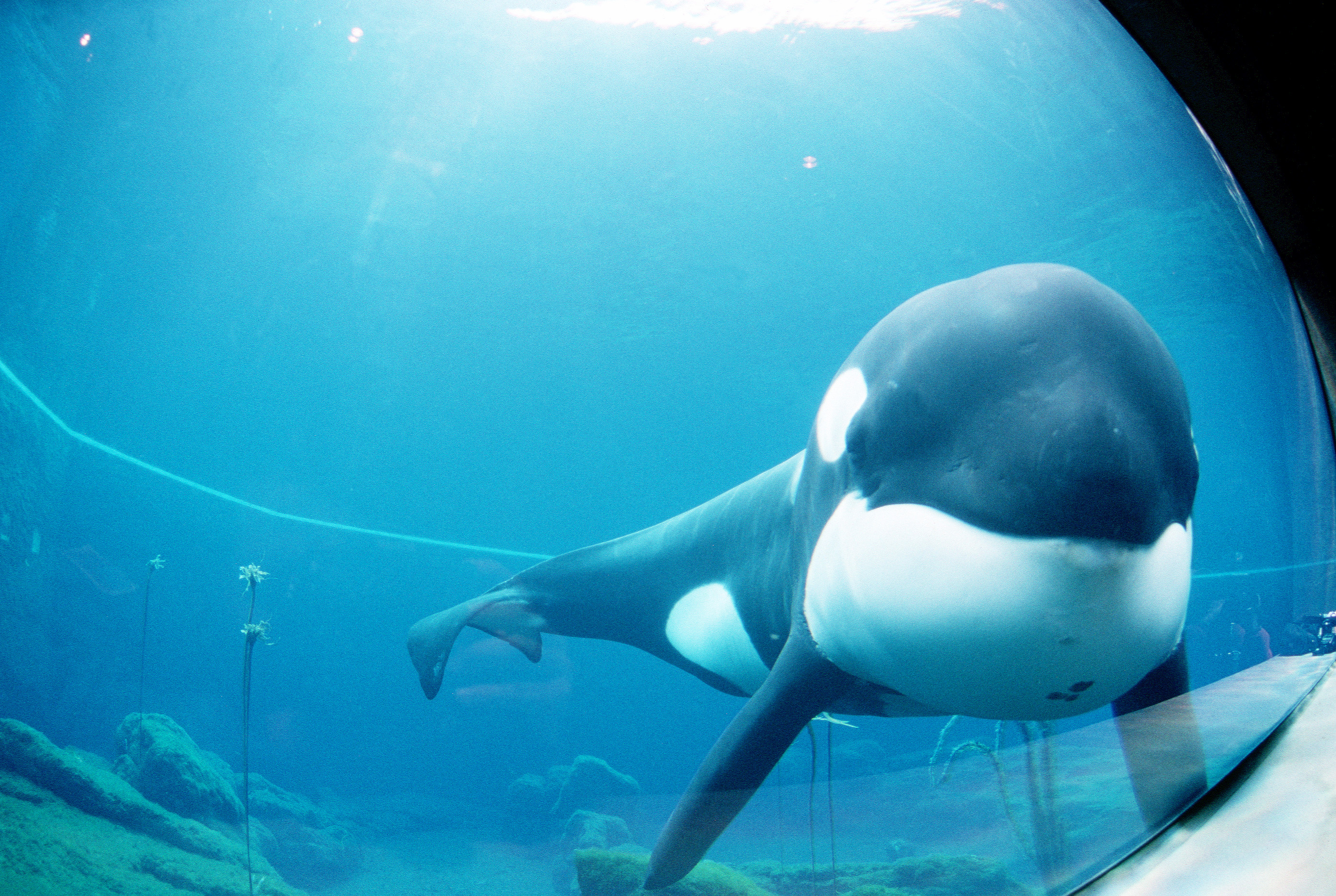
Juvenile killer whale. Photo by Sara Tavares.

And this year’s fieldwork is now finished. These were some full 3 months!! We have now packed everything and left the beautiful island of Heimaey. But this was not an easy trip. The bad weather (strong winds that lead to high swell!) made it more complicated than it needed to be, with canceled ferry trips to mainland Iceland and then a ferry trip that took 3 hours (instead of the normal 30 minutes!)... But we eventually made it!

Packed car!

Before the bad weather hit the archipelago, we still had an awesome encounter with killer whales during the last week. These whales were travelling almost non-stop, they had somewhere to go! 3 of the juveniles kept coming close to the research boat, it looked like that they were playing with the bobbles that the engine was making… Very cool to see, but the driver had to be extra-focused since we had to navigate the boat with even more caution than usual, because they were coming so close!


These killer whales were travelling fast, where were they going? Photo by Sara Tavares.

Adult male killer whale travelling. Photo by Sara Tavares.

The Icelandic Orca project will be back next year, and all new fieldwork adventures will be reported here on the blog! Takk fyrir Iceland! Takk fyrir Vestmannaeyjar!

Tuesday, 22 August 2017

Fieldwork 2017 - Minkes don’t eat chips

Commentary by Miguel Neves

Miguel Neves has been a part of the Icelandic Orca project fieldwork for the past 5 years. This blog post is about his experience over these last 2 weeks of August 2017.

Blue whales close to Heimaey. Photo by Filipa Samarra.

The last Earthwatch team of the season (team 5) has just left. After our one week forced break in the beginning of August because of the Þjóðhátíð1, it was a relief to see the whales were still around. This was the first time the fieldwork ran in August, and we were happy to learn that killer whales could still be found here this time of the year. But they weren’t the only thing we found. On one day we spotted blue whales from the land station and followed them on the boat to take pictures to share with researchers studying this species (did you know that a blue whale’s tongue alone can weigh as much as an elephant, and their hearts as much as a car?); on another day we worked with the killer whales so close to shore you could hear the blows from the land station, in Stórhöfði!

Glacier behind Suðurey. Photo by Sara Tavares.

The day after that, the sea seemed dead. No whales were spotted from the land station. Even so the sea was so flat we decided to go out on the boat to scout further offshore. And boy were we happy we did it. Behind the islands, in the land station’s blind spot, we saw an aggregation of minke whales, and counted over 11! Minkes feed on a wide range of prey, including small schooling fish, such as herring, capelin and sand eel, demersal fish, like cod and haddock and yes, you guessed it, not chips. But they do feed on krill! And we got to see those red patches in the sea that are made up of thousands and thousands of minuscule crustaceans, and the surface of the water seemed to bubble when they swam. This is the stuff documentaries are made of.

One of the minkes of the aggregation. Photo by Sara Tavares.

Red-necked phalaropes and a minke in the background. Photo by Sara Tavares.

Video by Miguel Neves.

1Þjóðhátíð (from Wikipedia; English: The National Festival) is an annual outdoor festival held in Vestmannaeyjar, Iceland […]. Locals and guests gather in Herjólfsdalur valley on the island of Heimaey for four days of various events. […] Þjóðhátíð was first held in 1874 when islanders were prevented by bad weather from attending the celebration on the Icelandic mainland of the millennium of Icelandic settlement.

Saturday, 19 August 2017

Fieldwork 2017 - lots of work in July!

Commentary by Sara Tavares


Uff!! We’ve been busy… We’ve had some full weeks at the end of July! Work with Earthwatch team 4 started slow, with some very bad weather (mostly strong winds) not allowing us go out on the boat or do land station surveys. However, after a few days, the weather changed completely and we were working non-stop! 

We had days with lots of sightings, one day we saw 4 different species: minkes, harbour porpoises, pilot whales and killer whales! Check out this video (by Miguel Neves) of the team working on the boat observing feeding killer whales:


We had a 1 week break during the first week of August and now we are back to work, with more news to come soon!

Monday, 24 July 2017

Fieldwork 2017 - the first 2 weeks of July!

 Commentary by Tom Bean

Tom Bean joined the Icelandic Orca project fieldwork this season as a skipper. This blog post is about his experience over these last 2 weeks with us.


Data collection with Earthwatch team 3 started in haste with particularly good weather, and clear views of the glacier – the calm before the storm! We found whales right away and were treated to some unique experiences. Namely, four whales had moved closer to the land station, and both the boat and land teams were treated to observing killer whales in and around the cave under Suðurey.

Killer whales inside a cave! Photo by Sara Tavares.

On the same day we managed to collect two herring samples from a feeding event.

Measuring the size of the prey fish collected during a feeding event. Photo by Filipa Samarra.

The days following this became more difficult to conduct boat surveys with limited weather windows. We rose from our rest between 5 and 6 on one morning, attempting to find a break in the weather of just a few hours. Unfortunately, the weather was not as predicted and we were not so lucky. Increased effort was focused upon the land station with more pairs of eyes and binoculars!

Land station seen from the boat (can you see those little dots at the top??!!). Photo by Sara Tavares.

Outings to the land station always bring excitement – foremost for the diversity of wildlife sightings in general, but also accounting for a stunning landscape, weather and sheep behaviour! It’s edge of the seat perseverance working in such a remote and alien environment. Personally, I often strain my eyes with my keenness to find something in an eight-hour survey period. Stopping to think about our location really drives home how privileged we are to be working here. Let me orientate you - behind us to the northeast there’s a huge glacier, Eyjafjallajökull (remember that one that erupted in 2010, cancelling all the planes?). It’s super stunning on a rare clear day. In front, to the southeast, is a myriad of islands, stacks and underwater volcanic mounds – lined up but spaced out in near precision – a physical documentation of eruptions through time (a bit like Galápagos). Not forgetting Surtsey, the furthest island from us, the extent of our survey area and one of the newest islands in the world, created by a sudden upwelling of magma in the 1960s.

Eyjafjallajökull visible at the distance. Photo by Sara Tavares.

If that wasn’t enough, we’re perched on the edge of an inhabited active volcanic island in an archipelago south of Iceland, peering over a one hundred metre sheer cliff, surrounded by 800,000 pairs of Atlantic puffins – the biggest colony in the world. Again, adding to the awe, we’re surrounded daily by stunning birdlife – ravens, great skuas, fulmars and snipes to name a few. Ravens are one of my favourites to watch, just for their sheer size, perceptual intelligence and noisy attitudes. Although male snipes put up a good fight in the noisiness contest, drumming their tail feathers in courtship displays.

Fulmars being fulmars... Photo by Sara Tavares.

OK, so we’ve walked the distance from the car to our station, seen some birds in their summer breeding rhythm (before the days grow short once more), but now the real work begins. We’re here to find whales! Our priority is to locate a group of animals for the boat team to gather some discrete focal data. Ideally, a small feeding group where every individual is photographed followed by a prey sample collection and a tissue biopsy – our main focus here is foraging ecology. So while one person commences the search, the remainder of our team sets up the theodolite, laptop and tent, simultaneously ready to record a sighting or shelter from any weather thrown at us. Our purpose is twofold: finding whales and reporting on the weather across the archipelago. As such, the boat and land station teams are in frequent contact and our role is critical to the success of the data collected from the boat. Intermittently we’re joined by our friends – the sheep. Big eyed, hungry and shaggy. Their fleeces are messy, and I mean hanging off their backs!

A killer whale checking us out! Photo by Sara Tavares.

During our land-based effort, it was a pleasure to speak with and educate tourists and school groups from around Europe and North America about our conservation and research work, and for some people to see their very first whales! It reminds me of my first wild cetacean encounters – the awe and wonder of a short snapshot in the lives of large and independent animals going about their business to feed and survive. No regard for the shopping centres, pop culture, advertising and fast-paced lives so many of us are now accustomed.

Thursday, 6 July 2017

Fieldwork 2017 - June completed! What will July bring?

Commentary by Sara Tavares

Two more weeks have past and we couldn’t have been luckier with the weather! We had the second Earthwatch team joining us over these weeks and we went out on the boat and worked in the land station almost every day.

Adult male killer whale travelling. Photo by Filipa Samarra.

We started this second study period very apprehensive, since we had read on the news about the NATO (North Atlantic Treaty Organization) exercise just South of Vestmannaeyjar running from the 23rd of June until today. We had no idea what this exercise involved but wondered if something could have an impact on the killer whales and make them move away from Vestmannaeyjar. So on the 26th of June we went out on the boat, and we searched for whales the whole morning around Heimaey. Nothing… No killer whales or any other marine mammal. The land station also looked for whales the whole morning and 3 different people saw a minke whale only once (!) and at different times… And never saw it again. They started calling it a ghost whale… Was it even real?

It seemed like a “dead sea” to us. And we were wondering: “Could this be connected to the NATO exercise? Did all the whales move away from here?”… But not giving up, in the afternoon we opted for a different route and looked for whales over the Northwest, further away from Heimaey where the land station only has partial view of the North of Vestmannaeyjar. And there they were!!! Killer whales everywhere! They were still here and it was around that area that they spent most time of these 2 weeks. We had amazing observations of feeding events in these area! We even had spy-hops and breaching whales at some point.

Humpback whale sighted from the boat. Photo by Filipa Samarra.

Adult male killer whale. Photo by Sara Tavares. 

The land station could follow the movement of these whales in the area and also saw other marine mammals from there, including pilot whales in the South of Heimaey. These were some amazing two weeks with lots of data collected. It shows that we can never get discouraged if we don’t find whales. Also, it is important to know that the whales are not in a specific area, so that we can learn how they use this herring spawning ground. As many researchers say: no data is good data!
We are looking forward to meet the third Earthwatch team and to continue data collection over the next two weeks. We can’t wait to see what these amazing killer whales will do next!

Kittiwake feeding near killer whales. Photo by Sara Tavares. 
Killer whale breaching. Photo by Sara Tavares.

Saturday, 24 June 2017

Fieldwork 2017 - the first 2 weeks!

Commentary by Sara Tavares


We’ve started our 2017 field season in Vestmannaeyjar and the first two weeks of fieldwork are completed! We’ve had our first Earthwatch team joining us and despite the periods of strong winds, rain and fog, we had some amazing sightings from the land station and encounters from the boat.

Adult male killer whales close to Heimaey. Photo by Sara Tavares.

Our land station is on Stórhöfði, a peninsula at the southern end of Heimaey which is the place of a meteorological station (officially the windiest place in Iceland!). From there, we can use using high-magnification binoculars to search for killer whales and other marine mammals and record their position using a theodolite. This will give us information on how groups of animals use the area over the season.

From the land station we saw killer whales, humpback whales, porpoises, potentially a beaked whale species (but it was not possible to confirm it), and pilot whales. And the observations of pilot whales could not have been more amazing! They appear in groups of hundreds and can be seen arriving from far away, in the horizon, since so many whales swimming so fast do a lot of splashing in the water!! And it’s incredible to see these large groups of whales arriving and the killer whales just moving away as the others come closer, eventually disappearing. The pilot whales are chasing the killer whales away! It was incredible to witness this from the land station.

Land station. Photo by Filipa Samarra.

Scanning for whales. Photo by Filipa Samarra.

We had awesome encounters from the boat, we saw many familiar killer whales (including a particular one with a distinct deformity in the spine, see our Facebook post here), minke whales, pilot whales and also an incredible sighting of a carcass of what looked like a shark. We could see the shark gills in the carcass on the sides of the head. It could have been a Basking shark but it was not possible to confirm the species due to the degradation of the carcass.

Killer whales travelling. Photo by Graeme Ellis.

Pilot whales coming close to the research boat. Photo by Graeme Ellis.

Shark carcass encountered floating on the water. Photo by Graeme Ellis.

From the boat we took photo-ID pictures and behavioural observations of the killer whales. And we were pooped on by gannets… a lot! It is very common to have countless gannets flying in circles above the boat.

These weeks were a very successful start of fieldwork. It was great to have such a fantastic Earthwatch team joining us in the field and it was wonderful to work with them all! We’ll have a second team joining us soon and we’ll keep you updated on new encounters and observations over the next couple of weeks!

Wednesday, 3 August 2016

Fieldwork 2016 - the end! What a great season...

 Commentary by Julie Béesau and Marie Louis


Our 2016 summer fieldwork is now finished. We have packed all the equipment and left the beautiful archipelago of Vestmannaeyjar. We had a very successful data collection this season and a month full of good weather, great orca encounters and an amazing group of people! Team members Julie Béesau and Marie Louis share with us their thoughts about the season. 


Julie

It was a pleasure to come back to help again the Icelandic Orca’s team, now in the summer place in Vestmannaeyjar. I discovered this wonderful area that is completely different from the winter fieldwork, I cannot compare the two areas. It’s just so amazing to be on the boat with the amazing wild animal named orcas. I spent two weeks there to participate in the data collection, in particular photo-ID.
As always the team atmosphere was really great, everyone on the boat was so happy to be in this beautiful landscape with whales and try to collect as much data as possible.
We had some great encounter with orcas and we saw some breaching and socialisation like the “pink lamprey”… I would like to thank everyone for this wonderful two weeks spent there.

Happy killer whale around Vestmannaeyjar. Photo by Julie Béesau. 

Amazing sunset after our last day on the boat. Photo by Julie Béesau.


Marie

Fieldwork and staying in Vestmannaeyjar was amazing. We had really great weather during the last 8 days and could go out at sea every day. We saw lots of killer whales in large feeding aggregations. One of the highlights of the season was to see hundreds of killer whales swimming very fast away from the pilot whales! It was very impressive!
Thanks everyone for a great time!  And a special mention to our favourite friendly whale Cray-cray featured in the last blog post!

Spy-hopping killer whale. Photo by Marie Louis.

The A-team enjoying the last very sunny and warm survey day (yes this photo was taken in Iceland!). Photo by Marie Louis.

Wednesday, 27 July 2016

Fieldwork 2016 - on the last week already!

 Commentary by Gary Haskins

Gary Haskins joined the Icelandic Orca project fieldwork this season as a skipper. This blog post is about his experience over the first 3 weeks with us.


We have been testing out the feasibility of utilising a land based crew to monitor and track orca movements using a theodolite. This system allows us to record the positions and movements of whales, boats, tidal flows/upwellings, etc., on map in real time. This is cool as firstly the land based team can direct boat teams on the location of whales, but also you get large scale movement and behavioural data that can be then related to lots of environmental factors or even boats in the area. This gets even cooler when you place a listening device, moored at sea visible from the land station so that behavioural activity can then be monitored in conjunction with ‘listening in’ on the associated vocalisations a’ la the NSA. Unlike the NSA however, we welcome whistle blowing.

This is all good in theory (and in practice eventually) but theodolites are fickle beasts, otherwise known as pieces of precision equipment. They have to be set up carefully and once set up, they must not be knocked. They become difficult to use at rock concerts, and I imagine they are a right pain in Space, but of more relevance they are a bit iffy in windy places. It turns out that our land observation point, Stórhöfði, is the windiest place in Iceland. Literally. (The actual meaning of literally, not the silly new meaning, where literally has literally become the antithesis of itself).

OMG! Jen was so happy to be collecting data she literally died.

In short the theodolite has to be levelled and any movement by a tiny margin will give false or no readings. Therefore wind can hinder the set up. But, we went from taking two patience sapping hours to being able to do it effectively and accurately in 10 minutes. We successfully tracked orca and collected some nice data on minke presence and movements for our undergrad student, Jenifer Stollery. We even recorded a sneaky anomalously pigmented (white) harbour porpoise calf.

A porpoise is in this picture somewhere. Photo by Jen Stollery.

Other than that I have been skippering the boat, helping out with Photo-ID and bit of acoustics and anywhere that I can try and lend a hand. Our main goal this week has been to acquire biopsy samples from orca using an ARTS system. The ARTS fires a dart that takes a small sample from the whale (its harmless) and allow all sorts of information to be determined; diet, movements, sex, relatedness, pollutant load. Again, great sounding in theory but in practice it can be pretty tricky to get close enough to these animals. According to Craig Matkin, they act like ‘offshores’. That basically means they are boat shy and have a circle of trust, of about 25 or more meters. We can biopsy up to about 18 m so gaining access is a case of softly, softly catchee monkey. But man, those last few moments, as we edge ever closer, timing our gentle arrival to the last surface of our target animal before it dives…..you could cut the air with a theodolite.

Miguel with the ARTS system, as we enter the circle of trust.

Celebrating a successful biopsy, Miguel claims all the credit and won't share the sweets.

As well as boat shy, twice now I have seen these orca porpoise at high speed away from incoming pilot whales. Admittedly there were lots of pilot whales charging in like madmen but there were perhaps over one hundred orca. In addition, a local fishermen was telling us about how the whales he sees from his boat always flee when the porpoise turn up. He insists its porpoise displacing them. Orca – you used to be cool man, what happened?

Scary pilot whales apparently.

N.B. I say they are wary and boat shy, and they are. All exempt our new favourite whale, IS423 – affectionately named by Miguel as Richie Cray-Cray. Whilst the others are playing hard to get, IS423 approaches the boat and swims in our wake, less than a metre from us, seemingly attracted to the bubbles produced by our engine. He is now too close to biopsy, obviously.

Thanks to all for having me as part of the team! It is greatly appreciated.

Video of IS423 (by Miguel Neves).


Tuesday, 19 July 2016

Fieldwork 2016 - the first 2 weeks!


Commentary by Marie Louis

Marie Louis is a post-doctoral fellow at the University of St Andrews joining the Icelandic Orca project fieldwork this season. This blog post is about her experience over the first 2 weeks with us.

I am helping with field data collection on killer whales in Vestmannayejar since two weeks. It has been a fantastic and interesting experience so far. Sara and Filipa explained us during the first couple of days how the material was working and how the data should be collected. 

On the boat, I am in charge of taking photo-identification data. Sara showed me during the first two trips how the photo-ID data is collected in particular for social structure analyses. The challenging but also exciting part is to get eye patches’ photos of the calves as they are fast and often stay behind their mother. It greatly helps for their identification as their saddle patch is usually faint. 

Adult male dorsal fin and saddle patch. Photo by Marie Louis.
Female and juvenile. Photo by Marie Louis.

Female, calf and juveniles. Photo by Marie Louis.
We had really great encounters with the killer whales and good weather conditions. We are re-sighting part of the same whales trip after trip, sometimes with different associates. Some of the whales (as illustrated by the below photos of the male with the floppy fin and the female with a big notch on the dorsal fin) are easy to recognize in the field. During the last trip, several groups of whales were feeding and surrounded by lots of diving gannets. There was also a humpback whale in the middle of the groups of killer whales. We sampled herring from these feeding events; Filipa will use them for stable isotopes analyses to better understand the feeding ecology of the killer whales. 

Humpback whale. Photo by Marie Louis.

Adult male with a floppy fin. Photo by Marie Louis.

An easily recognizable female with a big nick (IS035). Photo by Marie Louis.

It was also very interesting to see other parts of the data collection: acoustic recordings and behavioral sampling, and tracking data collection from land using a theodolite. I am very glad to be here, the Vestmannayejar is a very beautiful archipelago and an amazing field site. It is also a paradise for seabirds and puffins-fans!  Every evening we rotate to cook a nice meal for everyone and learned new recipes including tasty vegan cakes. We have been stuck on land due to a storm yesterday but tomorrow’s forecast is looking good. I am looking forward to see what the next two weeks will bring!

Juvenile killer whale. Photo by Marie Louis.

Gannet rock in Vestmannaeyjar. Photo by Marie Louis.

Puffin. Photo by Marie Louis.

The view from the volcano that erupted in 1973. Photo by Marie Louis.

Tuesday, 14 June 2016

DNA can say so much...

Commentary by Sara Tavares

The amazing work done for more than 20 years in British Columbia, photographing and identifying (all) killer whales, gave us unprecedented knowledge about this species. The detailed photographic dataset created in British Columbia is invaluable for the conservation and monitoring of the local populations.

But sometimes photographic identification is not enough and other kinds of information from the individuals becomes important, such as its specific genetic "fingerprint" - DNA.

This blog post by Dr. Carla Crossman, molecular and marine biologist with the Vancouver Aquarium Marine Science Centre’s Coastal Ocean Research Institute, is a great example of how invaluable genetics studies are when working with wild populations. Last April, 2 dead individuals washed out in British Columbia in a state of decomposition that did not permit identification based on appearance. But using existent knowledge of the genetic variation across populations, the Vancouver Aquarium Marine Science Centre’s Coastal Ocean Research Institute discovered to which population the individuals belonged to by their genetic code. Working long hours to get this information as soon as possible, the molecular biologists in the Institutes’ Conservation Genetics Lab were able to tell that both whales belonged to the fish-eating resident population and more specifically to the southern community! Amazing, right? This was possible due to previous studies by Dr. Lance Barrett-Lennard, currently senior marine mammal scientist at the Vancouver Aquarium Marine Science Centre’s Coastal Ocean Research Institute, that discovered which variations in the genetic code distinguished the killer whale populations.


3 males traveling together. Are they from the same family and therefore genetically related? Uncovering this is one of the goals of the Icelandic Orca project.


We are currently working on building up this kind of genetic knowledge on the Icelandic killer whale population to help us monitor the status of the population. One of the goals of our project is to map the genetic relatedness among individuals and understand the genetic variability within the population. It will be some years until we uncovered all this but during the last 2 years we made great progress collecting small biopsy samples of skin from photo-identified individuals. Lately, we have been trying to find the best genetic markers to use on this population (because the variations in the genetic code are not the same among populations) so that we can start uncovering this vital information about the animals.

But, as Carla Crossman so well shows on her blog post, genetic analysis can be a slow process... Even just extracting DNA from a small piece of skin from a single individual whales takes several days! And extracting DNA is just the very first step! Then you need to test different genetic markers, optimise protocols and only once all that is complete can you start going through all the small skin biopsies to start gathering information from different individuals. So it can usually be many months until this type of analysis is complete. We will keep you posted about new developments on the very exciting genetic studies being conducted!

Thursday, 28 January 2016

My Icelandic orcas' experience

Commentary by Julie Beesau


Julie Beesau spent 2 fieldseasons volunteering with us at the Icelandic Orca project in 2013 and 2014. This blog post is about her own experience working with Icelandic orcas.

I have spent two months in Iceland, in Grundarfjörður, during winter fieldwork twice (in 2013 and 2014) with all the Icelandic Orcas' team. It was such a great experience for me. I've always wanted to see orcas in the wild and study them. I learned many things on their social and feeding behavior, and I could also enjoy the magic of their acoustic communication.
I was in charge of taking pictures and acoustic recordings on the whale watching boat. It was also nice to discuss and explain to tourists what kind of studies we can do on orcas.
I remember one day we encountered more than 100 orcas in the fjord, it was just unbelievable. I think this day was my favorite and will be engraved in my memory forever.

Male orca. Photo by Julie Beesau.


Every day after the trip on the whale watching boat I would meet the rest of the team in our house where we shared our sightings and experiences on the boat and also a great meal.

Landscape of  Grundarfjörður. Photo by Julie Beesau.
I could also appreciate the magical landscapes of Iceland and sometimes the capricious weather.
It was a unique experience, rich in animal sightings but also rich in human contact. I met some absolutely lovely and very helpful people there (Icelandic, Portuguese, Russian, Italian, Scottish, Dutch, German people).

Thank you to all the Icelandic Orcas’ team and also to Láki Tours, especially captain Gísli.


Wednesday, 20 January 2016

Do whales have culture?

Commentary by Sara Tavares

What is culture? Is culture something that makes us, humans, special?
This was the theme of the last Café Scientifique meeting I attended, a monthly evening public meeting in a café/bar where scientists are invited to talk about their work or another interesting topic. In the last one I attended in St Andrews, Luke Rendell talked about his latest book, co-authored with Hal Whitehead, "The cultural lives of whales and dolphins", on the theme of culture in cetaceans.

So, what is culture? 
How to define culture has been one of the biggest academic discussions. Culture is not genetic, is not in the DNA. Broadly, culture is the accumulation of knowledge that is passed across generations over time.
Different sperm whale populations have different codas (stereotyped pattern of clicks) and in the Pacific different social groups make different codas and some groups share the same dialect and temporarily spend time together. This is part of the cultural identity of these whales and is not genetically transmitted, since genetic studies showed a mix of genes between groups that mismatch the dialect pattern.

This is just one example for one species that shows the existence of culture in cetaceans. Culture is probably vital for highly social animals such as cetaceans. One of the stories presented in the Café Scientifique meeting as an interesting example of the importance of cultural identity in whales was the story of Keiko, the Icelandic killer whale. Keiko was captured when he was around 2 years old and kept for many years on his own in a small tank. 

 
The killer whale Keiko, star of the film Free Willy (source: Wikipedia)


When adult, Keiko was gradually freed in Vestmannaeyjar (where we conduct our fieldwork in the summer), first kept in a sea pen for habituation. In one occasion, when Keiko was accompanied by a boat with people involved in his re-introduction , he was approached by one killer whale that tried to interact with him going "belly to belly", a common social behaviour among whales . However, Keiko quickly swam away from the whale and "hid" behind the boat, possibly scared by that unfamiliar behaviour.  After full release, Keiko eventually swam to Norway where he was adopted by a fishing village and fed by humans, until he eventually died, probably from pneumonia.

Keiko couldn't be re-introduced in the Icelandic killer whale society because, after being apart from these whales since a very young age, he didn't know the culture.

Although this is just one single story of only one whale it can still suggest to us how important culture might be for cetaceans. So maybe the question shouldn't be how to define culture but how many forms of culture there are. Because human culture and whale culture are not the same, but they both exist and they are both unique.

Café Scientifique is currently active in more than 40 towns across the UK and in some cities in other countries. Check out on their website where and when is the next meeting in your town and join the discussions!